So Close, Yet So Far: The Science Behind Why Almost Winning Feels Incredible
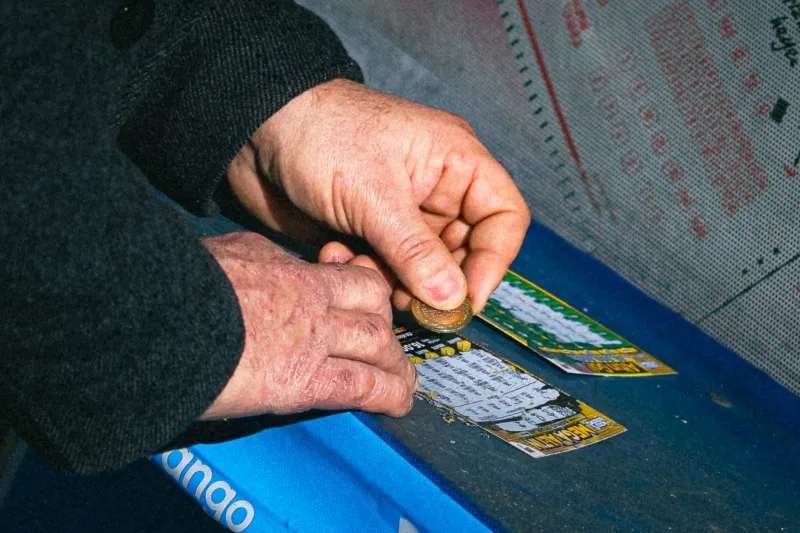
You've been there. You scratch off the first symbol — match. Second symbol — match. Heart rate ticking up, fingers moving a little faster now. Third symbol? Not a match. Game over.
But here's the weird part: somehow, that loss felt more exciting than the three bucks you actually won on your last ticket. Why does almost winning hit so differently? And what does it mean for how we experience scratch games? Let's dig into the science.
Your Brain Doesn't Know the Difference Between "Close" and "Win"
From a pure logic standpoint, a near-miss is just a loss. You didn't win. The outcome is objectively the same as scratching off three completely random, non-matching symbols. But your brain? It didn't get that memo.
Research in behavioral neuroscience has shown that near-miss outcomes activate the brain's reward circuitry in ways that look strikingly similar to actual wins. A landmark study out of Cambridge University found that near-misses triggered dopamine release — the same feel-good neurotransmitter associated with real rewards — even when participants received nothing. The brain, essentially, treats "almost" as meaningful information.
Dr. Luke Clark, one of the researchers behind that work, described it this way: the brain is wired to interpret near-misses as signals that a win is closer, even in games that are entirely random. Slot machines, lottery scratchers, instant-win games — none of them have memory. Your odds don't improve because you almost won last time. But your brain keeps whispering that they do.
The Intermittent Reinforcement Trap
If you've ever taken a psychology class, you might remember B.F. Skinner and his famous experiments with rats pressing levers. What Skinner discovered — and what decades of research have confirmed — is that intermittent reinforcement is the most powerful behavioral motivator there is.
Here's how it works: when a reward comes sometimes, unpredictably, the drive to keep trying becomes almost compulsive. Compare that to a vending machine. You put in a dollar, you get your chips, every single time. Reliable. Satisfying. But not exactly thrilling. Now imagine if the vending machine gave you chips sometimes, or gave you extra chips randomly, or occasionally let you pick anything in the machine for free. Suddenly you're way more invested in that vending machine.
Scratch games operate on a similar principle. Small wins, big wins, and losses — including near-misses — arrive in an unpredictable sequence. That variability keeps the experience engaging in a way that a guaranteed, consistent outcome simply can't replicate. It's not a flaw in the design; it's a feature of how human psychology responds to uncertainty.
Why Near-Misses Feel More Motivating Than Small Wins
Here's something counterintuitive: research suggests that a near-miss can be more motivating than actually winning a small prize. A $2 win is pleasant. A near-miss on a $500 jackpot triggers something deeper — a sense of unfinished business, a feeling that the big prize is within reach.
Behavioral psychologists call this the "near-miss effect," and it's been studied extensively in the context of gambling and gaming. The effect is strong enough that game designers across industries — from video games to casino floors — deliberately engineer near-miss experiences to sustain engagement.
In scratch games specifically, this can show up in how ticket layouts are structured. Seeing two of three matching symbols isn't random noise; it's an outcome that carries psychological weight far beyond its actual value (which, again, is zero). The closer the miss, the more compelling the pull to try again.
Knowing This Changes How You Play
So what do you do with all of this? The good news is that awareness itself is a powerful tool. Once you understand that near-misses are a neurological quirk — not a sign that you're "due" for a win — you can start to observe your own reactions with a little more curiosity and a little less urgency.
Here are a few grounded ways to keep your scratch game experience fun without letting the near-miss effect run the show:
Set a session budget before you start. Decide what you're comfortable spending before you scratch your first ticket. Near-misses are most likely to push you past your own limits in the heat of the moment, so make the decision in advance.
Pause after a close call. That spike of excitement after a near-miss is real, and it can cloud judgment. Taking even 30 seconds to breathe before scratching the next ticket gives your rational brain a chance to catch up with your emotional one.
Separate the thrill from the outcome. The excitement of a near-miss is a genuine experience — it's not fake just because you didn't win. You can enjoy the ride without chasing it. Recognizing that the fun is in the scratch itself, not just the win, can reframe the whole experience.
Track your play. It sounds boring, but keeping a simple log of what you spend and win over time gives you an honest picture that your dopamine-flooded brain might not provide in the moment.
The Bigger Picture
None of this is meant to make scratch games feel like a trap. Millions of people scratch tickets every week for the same reason people watch thriller movies or ride roller coasters — the uncertainty, the tension, the possibility of a payoff. That's a completely valid form of entertainment.
But entertainment works best when you're in the driver's seat. Understanding why near-misses feel so compelling — why your pulse quickens over a loss that looked like a win — puts you back in control of your own experience. You're not just reacting; you're playing with your eyes open.
And honestly? Knowing that your brain is pulling off this whole elaborate trick in real time is kind of fascinating in itself. The next time you come agonizingly close on a scratch ticket, you can almost appreciate the show your own mind is putting on.
Almost.