Why Scratch Games Are Winning the Battle Against Casino Apps

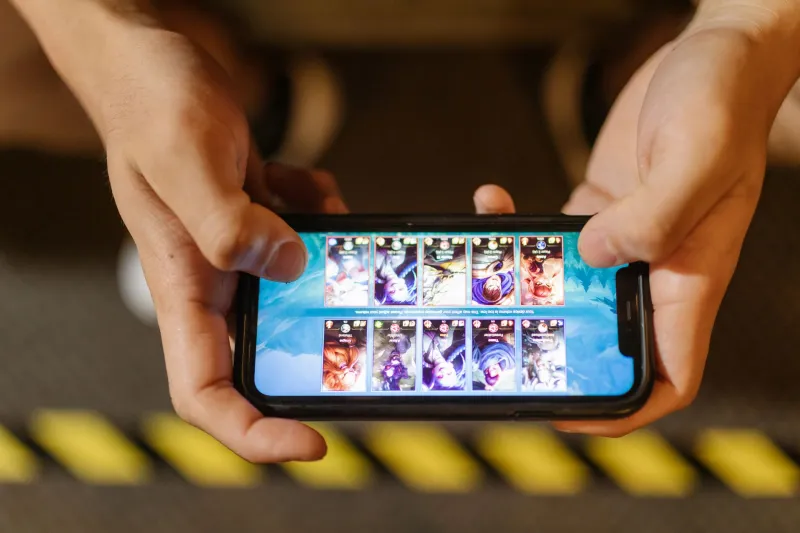
Photo by Photo by Amanz on Unsplash on Unsplash
A few years ago, the conventional wisdom was pretty clear: if you wanted digital gaming on your phone, you downloaded a casino app. Slots, blackjack, video poker — the whole Vegas experience in your pocket. It seemed like a lock.
Then something shifted.
Digital scratch games started gaining serious traction, and not just among players who'd never touched a casino app. Experienced slot fans were quietly migrating too, swapping spinning reels for the clean, fast, tactile satisfaction of an instant-win scratch. And the numbers have been catching up with the anecdotal evidence ever since.
So what happened? Why are Americans increasingly choosing scratch over slots?
The Speed Problem That Slots Never Solved
Here's a tension that casino app designers have wrestled with for years: slots are designed to be immersive, but modern mobile users have increasingly short windows of available attention.
The average American squeezes gaming into micro-moments — the three minutes waiting for coffee, the brief pause between meetings, the commercial break during a game. Slots, with their elaborate spin animations, bonus round build-ups, and multi-stage payline reveals, are fundamentally built for sustained sessions. They're not optimized for the way most people actually have time to play in 2024.
Scratch games, by contrast, are native to the micro-moment. You open the game, you scratch, you know the outcome. The entire loop — from launch to result — can be completed in under 60 seconds. That's not a limitation. That's a superpower.
Animation Fatigue Is Real, and It's Killing Slot Engagement
There's a phenomenon that UX researchers have started calling animation fatigue — the creeping sense of irritation that builds when an interface makes you wait through visual sequences you didn't ask for and can't skip.
Slot apps are ground zero for this problem. The spinning reels. The cascading symbols. The near-miss animations that drag out a losing result into a 4-second theatrical production. The bonus wheel that appears with a fanfare and then awards you 50 virtual coins.
For new players, this stuff feels exciting. For experienced players, it starts to feel like the game is wasting their time.
Scratch games have a fundamentally different relationship with animation. The visual feedback in a well-designed scratch game is immediate and earned — it happens because you made something happen, not because the algorithm decided to put on a show. That distinction sounds small, but players feel it viscerally.
The Barrier-to-Entry Gap
Let's talk about learning curves, because they matter more than the industry often acknowledges.
Slots, for all their apparent simplicity, carry hidden complexity. Paylines. Volatility ratings. Scatter symbols. Wild multipliers. Bonus round trigger conditions. A player new to casino apps has to absorb a significant amount of mechanical information before they can even evaluate whether they're playing well or poorly.
Scratch games have almost none of that overhead. The rules are self-evident. You scratch. You look for matches. You win or you don't. A player can be fully competent at a scratch game within their first 30 seconds of play — and that accessibility is enormously valuable in a market where attention is the scarcest resource.
This low barrier doesn't just attract new players. It retains them. There's no frustration phase, no "I don't understand what just happened" moment that sends someone back to TikTok instead.
The Tactile Satisfaction Factor
This one is harder to quantify, but it's arguably the most important driver of the shift.
Digital scratch games have successfully translated the physical sensation of scratching a lottery ticket into a touchscreen interaction — and it works in a way that spinning a virtual slot reel simply doesn't.
When you drag your finger across a digital scratch panel, your brain maps that gesture onto a lifetime of physical scratch-card experience. The muscle memory is real. The anticipation that builds as the panel clears is real. The moment of reveal carries genuine emotional weight because the action that produced it felt meaningful.
Slot spins, no matter how polished, are essentially passive. You press a button and watch something happen to you. Scratching is something you actively do. That agency — even when the outcome is random — creates a fundamentally different emotional experience.
What the Data Is Starting to Show
Market analysts tracking mobile gaming trends have noted consistent year-over-year growth in the instant-win category, with particularly strong performance among two groups: adults 25-40 who never fully adopted casino apps, and former casino app users who describe themselves as "burned out" on slots.
The second group is especially telling. These aren't players who lost interest in gaming. They're players who lost interest in a format — and found a new one that serves their needs better.
Mobile gaming platforms that have added scratch game verticals alongside traditional casino offerings report that a meaningful percentage of their users now exclusively engage with the scratch content, despite having access to full slot libraries.
The Simplicity Isn't a Compromise — It's the Product
There's a tendency in gaming culture to treat simplicity as a lesser quality — something you settle for when you can't handle the "real" games. That framing is increasingly outdated.
The players driving scratch game growth aren't choosing simplicity because they don't know any better. They're choosing it because they've decided that complexity isn't adding value to their experience. They want the core loop — the anticipation, the reveal, the result — without the decorative friction that slots pile on top of it.
In a world where every app is competing for the same limited attention, the game that respects your time wins. Right now, scratch games are winning that argument pretty convincingly.