Lottery vs. Scratch: Why More American Players Are Ditching Weekly Drawings for Instant Wins
For generations, the weekly lottery drawing was a ritual. You picked your numbers, you waited, you watched the ping-pong balls drop on TV, and you either celebrated or you didn't. It was simple, communal, and deeply embedded in American culture. But that ritual is losing ground — and the players walking away aren't quitting gaming altogether. They're scratching.
Digital scratch games have quietly become one of the fastest-growing segments of casual gaming in the US, and a significant chunk of that growth is coming directly from players who used to be loyal lottery customers. So what's driving the switch? It's not just one thing — it's a convergence of factors that together make a pretty compelling case.
The Waiting Game Nobody Wants to Play
The most obvious difference between a lottery ticket and a scratch game is time. With a traditional lottery drawing, you buy your ticket and then you wait — sometimes days. That waiting period used to feel like part of the fun. The daydreaming, the "what if," the slow build of anticipation.
But American entertainment culture has shifted hard toward immediacy. Streaming killed the appointment TV model. Same-day delivery made waiting for packages feel antiquated. In that context, waiting 72 hours to find out if your numbers hit feels increasingly out of step with how people want to consume entertainment in 2024.
Scratch games deliver the entire emotional arc — anticipation, reveal, outcome — in under a minute. For a generation conditioned by instant feedback loops, that's not a small advantage. It's a fundamental realignment of the entertainment experience.
Lower Buy-In, More Control
Mega Millions and Powerball jackpots make headlines precisely because they're enormous. A $500 million jackpot is a cultural event. But the flip side of that massive prize pool is a vanishingly small probability of winning anything meaningful. The odds of winning Powerball's jackpot sit around 1 in 292 million. That's not a number most people can intuitively relate to — it's closer to an abstraction than a real chance.
Digital scratch games operate on a fundamentally different probability structure. The prizes are smaller, yes, but the odds of winning something are dramatically better. A well-designed scratch game might offer a 1-in-4 or 1-in-5 chance of returning some value. That ratio keeps players engaged in a way that lottery odds simply can't.
There's also a cost-of-entry consideration. Lottery tickets have crept up in price over the years, with many drawings now requiring a $2 minimum per play. Some players are buying multiple tickets per drawing across multiple games, spending $20 or more per week without a second thought. Digital scratch games offer more granular control — players can choose their per-game spend and manage their sessions in real time rather than committing to a weekly outlay.
Mobile Is Where the Audience Lives
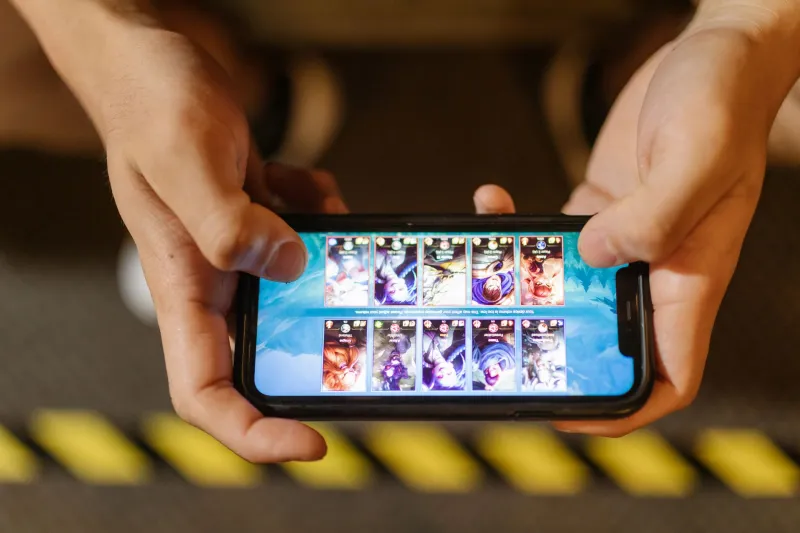
This one is hard to overstate. The smartphone has become the primary entertainment device for most Americans under 50, and it's gaining ground with older demographics too. Traditional lottery tickets are a physical product requiring a physical purchase at a physical location. That's a meaningful friction point in a world where people do their banking, shopping, socializing, and entertainment consumption from a device in their pocket.
Digital scratch games meet players exactly where they are. No gas station trip required. No losing track of a paper ticket. No missing the drawing because you forgot to check. The entire experience — purchase, play, payout — lives inside an app that's already open on your phone.
This accessibility gap between lottery and digital scratch is particularly pronounced among younger players. Millennials and Gen Z consumers have shown consistent preference for digital-first entertainment options, and lottery operators have been slow to adapt. Scratch game platforms, built native to mobile from the ground up, have capitalized on that hesitation.
The Demographic Shift Is Already Happening
Lottery participation data tells a clear story about who's staying and who's leaving. Traditional lottery players skew older — surveys consistently show the highest participation rates among Americans 45 and up. Younger adults, particularly those in the 25-35 bracket, are significantly underrepresented in weekly lottery play.
Digital scratch gaming platforms are pulling from a much broader age distribution. The convenience factor appeals to younger players who might never have bought a lottery ticket. The familiar "scratch to reveal" mechanic appeals to older players who grew up with physical scratch tickets and are ready to take the experience digital. The result is a more democratized player base.
Gender distribution is also more balanced in digital scratch gaming than in traditional lottery play, which has historically skewed male. The casual, low-pressure format of scratch games has attracted a significant female player base — a demographic that lottery operators have struggled to engage consistently.
What the Lottery Still Has Going for It
To be fair: traditional lottery isn't going anywhere. The jackpot fantasy is a uniquely powerful product. Nobody plays Powerball because the odds are good — they play because the prize transforms lives, and that narrative is genuinely compelling. A $200 million jackpot generates a kind of cultural buzz that no scratch game can replicate.
And there's something to be said for the ritual of picking numbers, the shared anticipation of a drawing, the office pool tradition that turns a Tuesday into a communal event. Those social dimensions are real, and they're not easily digitized.
But for players who want entertainment value per dollar, more frequent feedback, mobile accessibility, and better odds of winning something on any given session — scratch games are making a case that's getting harder to argue with. The numbers, and the players, are moving in one direction.