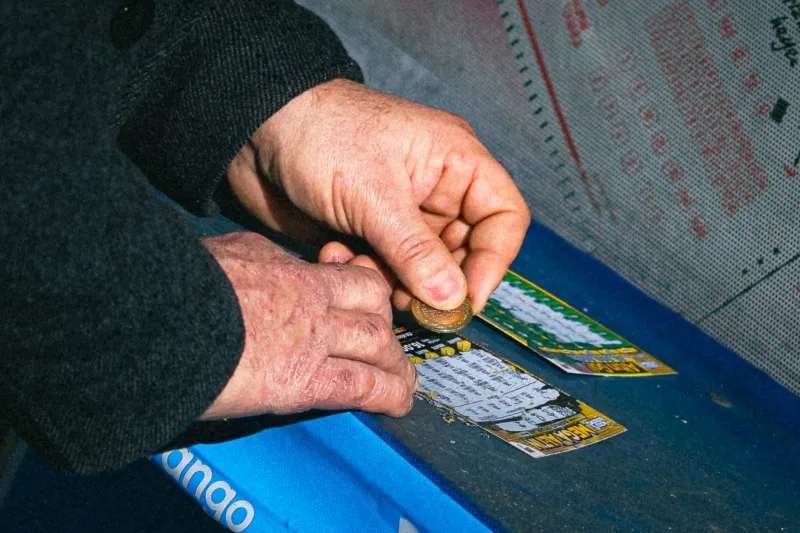
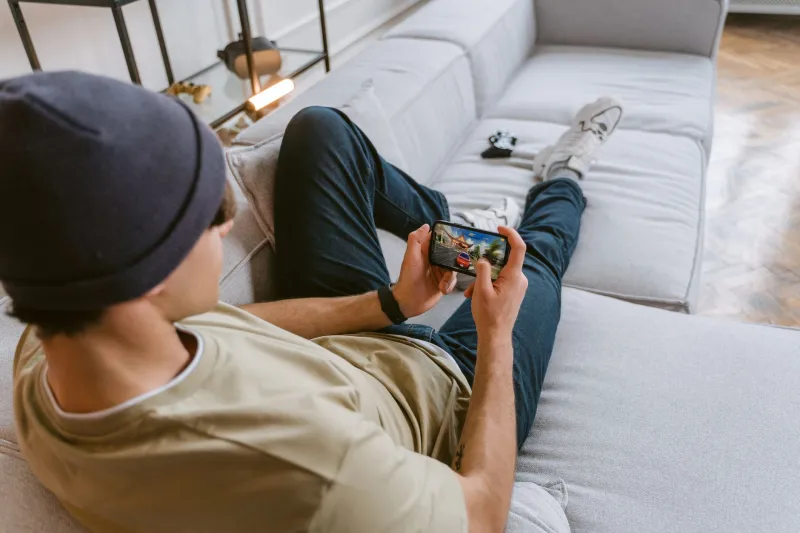
Scratch and Breathe: Why Instant-Win Games Are Becoming America's Favorite Midday Reset

It's 1:47 PM on a Tuesday. Your inbox is a disaster, your 2 o'clock meeting is looming, and the vending machine just ate your dollar. Sound familiar? For a growing number of Americans, the answer to that specific brand of midday misery isn't another espresso or a five-minute meditation — it's pulling up a scratch game and peeling back a few virtual tiles.
That might sound like a surprising stress-relief strategy, but researchers and behavioral psychologists are starting to pay serious attention to what casual gamers have apparently known for a while: there's something genuinely calming about the scratch-and-reveal format. And it goes a lot deeper than simple distraction.
Your Brain on Anticipation
Here's where things get interesting. The moment you hover over an unscratched tile, your brain doesn't just passively wait — it lights up. Specifically, your dopaminergic system kicks into gear, flooding your prefrontal cortex with the neurochemical most commonly associated with reward and motivation.
But here's the twist that most people don't realize: dopamine isn't primarily about getting the reward. It's about expecting it. The anticipation phase — that half-second before you scratch — is neurologically rich territory. Your brain is running rapid-fire predictions, weighing possibilities, and generating a low-level excitement that's actually quite effective at interrupting the stress response cycle.
When you're anxious or overwhelmed, your body is often stuck in a cortisol loop — a kind of background hum of fight-or-flight energy with nowhere to go. Introducing a novel stimulus with uncertain-but-possible positive outcomes essentially gives your nervous system something else to do. It's a pattern interrupt, and scratch games deliver it in about three seconds flat.
The Low-Commitment Sweet Spot
One of the reasons traditional stress-relief methods — yoga, journaling, even most meditation apps — struggle to gain traction with busy Americans isn't motivation. It's friction. When you're squeezed between a conference call and a school pickup, committing to a 20-minute guided breathwork session feels impossible.
Scratch games occupy a very different space on the time-commitment spectrum. A single game takes anywhere from 30 seconds to a few minutes, requires zero setup, and delivers a complete emotional arc — tension, reveal, resolution — before you've finished your last sip of lukewarm coffee.
This format aligns almost perfectly with what psychologists call "micro-recovery" — the idea that short, frequent mental breaks are often more restorative than longer, infrequent ones. Research out of institutions like the University of Illinois has shown that brief diversions from a task can significantly improve focus and reduce cognitive fatigue. Scratch games, almost by accident, are engineered for exactly this kind of mental palate cleanse.
Commutes, Waiting Rooms, and the Anxiety Gap
Ask anyone who plays casual scratch games regularly and you'll notice a pattern in when they play. Waiting for the subway. Sitting in a doctor's office. The ten minutes before a job interview. These are what behavioral scientists sometimes call "anxiety gaps" — unstructured moments where the mind, left idle, tends to spiral.
Smartphones were supposed to solve this problem, and in some ways they did. But doomscrolling through news feeds or social media often amplifies anxiety rather than reducing it. Scratch games offer an alternative: a contained, low-stakes experience with a defined beginning, middle, and end. There's no algorithm feeding you upsetting content. There's no comment section. There's just you, a grid of hidden symbols, and the genuinely pleasant uncertainty of what's underneath.
For commuters in particular — and there are roughly 128 million of them making daily trips across the US — that distinction matters enormously.
How It Stacks Up Against Other Quick-Fix Methods
Let's be honest: scratch games aren't the only tool in the midday reset toolkit. Deep breathing, a short walk, listening to music, even a quick phone call with a friend — all of these have legitimate stress-reduction credentials. So how does scratching actually compare?
The honest answer is that it depends on what you're trying to accomplish. If you need to lower your heart rate and activate your parasympathetic nervous system, box breathing is probably more clinically effective. If you need to process an emotion, calling a friend wins.
But if what you need is a fast, reliable interruption to anxious rumination — something that gives your mind a specific task, generates mild positive excitement, and wraps up neatly in under three minutes — scratch games compete surprisingly well. They're also, notably, available at 2 AM when most of your other options aren't.
The key distinction is intentionality. Using a scratch game as a conscious reset tool is a fundamentally different behavior than mindlessly gaming for hours to avoid real-world responsibilities. The former is a wellness strategy. The latter is avoidance. The format is the same; the relationship to it is everything.
Playing Smart: Getting the Most Out of Your Scratch Sessions
If you're curious about incorporating scratch games into your own stress-management routine, a few simple approaches can make the experience more genuinely restorative:
Set a time boundary. Decide before you open the app that you're playing for five minutes or three games — whichever comes first. This keeps the activity in micro-recovery territory rather than letting it expand into something that adds stress of its own.
Notice the moment before the reveal. Instead of rushing through tiles, pause briefly before each scratch. That moment of anticipation is actually the neurologically richest part of the experience. Leaning into it intentionally can make the whole session feel more grounding.
Use it as a transition ritual. Some players find scratch games most useful as a buffer between two demanding activities — a way to mentally close one chapter before opening the next. Think of it less like entertainment and more like a mental comma.
Check in with yourself afterward. Do you feel lighter? More focused? Slightly more capable of handling your inbox? If the answer is yes, you've used the tool well. If you feel more agitated or distracted, that's useful information too.
The Bigger Picture
America has a stress problem that isn't going away anytime soon. The American Psychological Association consistently reports that a significant majority of US adults experience stress at levels that interfere with daily functioning. The solutions we reach for — alcohol, oversleeping, endless scrolling — often make things worse.
Scratch games aren't a cure, and nobody serious is claiming they are. But as one low-friction, low-stakes option in a broader wellness toolkit? The neurochemistry actually supports the instinct that millions of players already seem to have.
Sometimes the most sophisticated stress-relief strategy looks surprisingly simple: find a quiet corner, pull up a game, and scratch.
At ScratchGames, we believe playing should feel good — and we're committed to making sure it stays that way. Explore our Player Wellness section for more on building a healthy relationship with casual gaming.