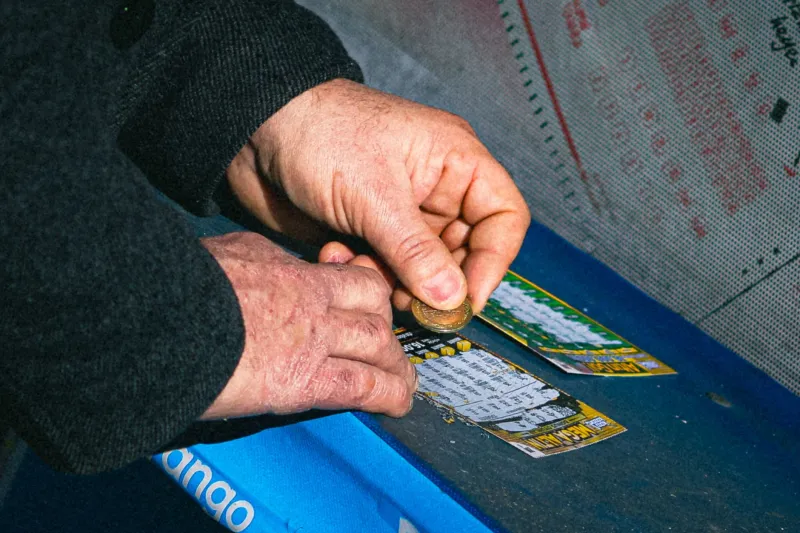
Dollar Signs and Jackpots: What Your Scratch Ticket's Price Tag Is Really Telling You
You've probably stood at a gas station counter at least once, staring at a rack of scratch tickets and thinking: does it actually matter which one I grab? The $1 ticket feels low-risk. The $5 ticket feels like it might pay off bigger. But is there a real difference hiding beneath those shiny surfaces — or is it all just packaging?
Spoiler: it absolutely matters. And once you understand the math and design logic behind ticket pricing, you'll never look at a scratch game the same way again.
The Price Point Is a Promise (Sort Of)
Here's the foundational truth about scratch game economics: ticket price directly correlates with the prize structure. Game designers — whether they're working for a state lottery or an online platform — engineer each price tier to deliver a specific experience.
A $1 ticket is built for volume. The prize pool is smaller, the top prize is modest (often a few hundred dollars, sometimes a few thousand), and the odds of winning something are calibrated to keep players engaged without breaking the bank — theirs or the house's. Think of it like ordering off the dollar menu. You're not getting a gourmet meal, but you're getting something satisfying for a buck.
A $5 ticket operates in a completely different lane. The prize architecture is more complex, the top prize climbs significantly, and the overall return-to-player percentage tends to be slightly more favorable. Designers know that players spending $5 expect more than players spending $1 — so the game has to deliver a richer experience to justify that spend.
Understanding Return-to-Player (RTP): The Number That Actually Matters
If you want to get strategic about scratch games, RTP is your new best friend. Return-to-player is the percentage of total money wagered that a game pays back out in prizes over time. It's not a guarantee for any single ticket — it's a statistical average across thousands of plays.
Here's where denomination gets interesting:
- $1 tickets typically carry an RTP somewhere in the 50–65% range
- $2 tickets often bump that up to around 60–68%
- $5 tickets can reach 65–75% RTP
- $10 and $20 tickets sometimes push into the 70–80% territory
Those percentages might seem abstract, but translate them into dollars and they start to hit differently. On a $1 ticket with 55% RTP, you're statistically "getting back" about 55 cents per dollar spent. On a $5 ticket with 70% RTP, that figure rises to $3.50 per $5 spent. Neither scenario is a money-making strategy, but if entertainment value and longevity of play matter to you, the math starts to favor higher denominations.
The Psychology of the Price Ladder
Game designers aren't just number-crunchers — they're behavioral psychologists in disguise. The price ladder is deliberately engineered to move players upward.
The $1 ticket serves as the entry point. It's the handshake. Low commitment, low risk, and just enough excitement to make you curious about what a $5 version might feel like. That's intentional. The modest win on a cheap ticket creates what researchers call an escalation of engagement — you won $4 on a $1 ticket, so your brain immediately wonders what a $5 ticket might deliver.
This isn't manipulation in a sinister sense — it's entertainment design, similar to how a movie theater sells small, medium, and large popcorns. Each tier is priced to feel like a reasonable upgrade from the last. The key is knowing this ladder exists so you can decide consciously where you want to stand on it.
Fewer Tickets, Better Odds? The Denomination Paradox
Here's something that trips up a lot of players: spending $5 on one $5 ticket versus five $1 tickets isn't necessarily the same bet, even though the dollar amount is identical.
When you buy five $1 tickets, you're playing five separate games, each with their own independent odds. You might win on two and lose on three. Your wins are likely to be small. Your entertainment is spread across five individual scratch moments.
When you buy one $5 ticket, you're playing a single game with a richer internal prize structure — more prize tiers, bigger payouts, and often a better RTP. You get one scratch experience, but it's deeper and more layered. For some players, that concentrated experience is more satisfying. For others, five individual moments of suspense beats one.
Neither approach is wrong. But understanding the difference helps you choose based on what you actually want out of the experience.
Reading the Odds Before You Play
One of the most underused tools available to scratch game players is the publicly listed odds information. In the US, state lotteries are required to publish overall odds and prize breakdowns for every game. Online platforms like ScratchGames make this even more accessible — the game details are right there before you commit.
Before picking a ticket based purely on price or aesthetics, take thirty seconds to check:
- Overall odds of winning any prize — this tells you how often the game pays out at all
- Top prize odds — the longer the odds, the rarer (and usually bigger) the jackpot
- Number of top prizes remaining — if a game has been running for a while, check whether the big prizes are still in play
This isn't about becoming a scratch game accountant. It's about making informed choices that align with your goals — whether that's chasing a big top prize or maximizing your chances of winning something, anything, on a tight budget.
Finding Your Sweet Spot
So what's the "right" price point? Honestly, it depends on what you're playing for.
If you're looking for a quick mental break — a two-minute escape during a hectic Tuesday — a $1 or $2 ticket does the job beautifully. Low stakes, instant gratification, no stress.
If you're setting aside a monthly entertainment budget for scratch games and want to maximize the quality of that experience, $5 tickets tend to offer more value per dollar spent, even if they reduce the number of plays you can afford.
If you're the kind of player who dreams about life-changing prizes, higher denomination tickets are where those jackpots live. The odds are longer, but the ceiling is dramatically higher.
The smartest approach? Know what you're walking in for before you scratch. The ticket's price tag isn't just a number — it's a roadmap to the entire game experience hidden underneath. Read it accordingly, play within your comfort zone, and enjoy every scratch for what it is: a moment of pure, uncomplicated possibility.
And hey — that's not a bad deal at any price point.