Fifty States, Fifty Scratch Personalities: A Road Trip Through America's Instant-Win Habits
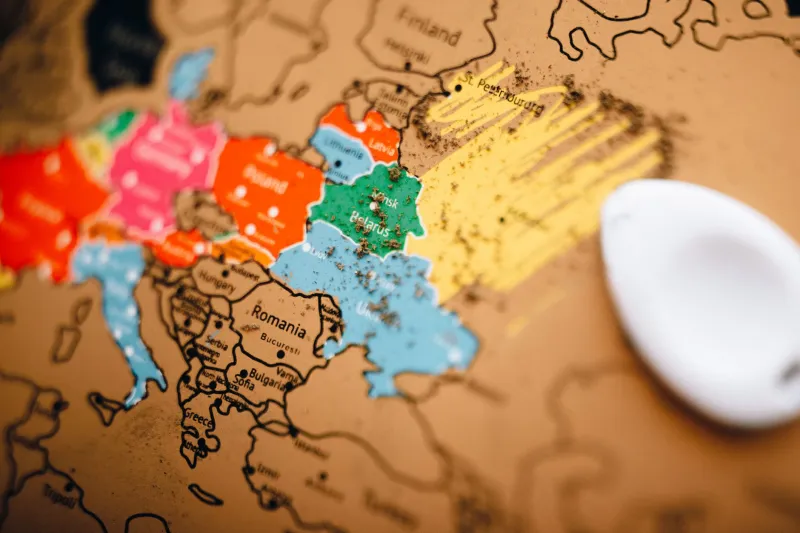
Spend enough time around scratch players and you start noticing something: instant-win culture isn't the same everywhere. The card a Texan reaches for, the routine of a Boston commuter, the way someone in rural Georgia plays a $30 ticket — it all shifts depending on where you plant your feet. Scratch might be a national pastime, but it's played with a regional accent.
The South: Go Big or Go Home
If there's one region that treats scratch tickets like a high-stakes event, it's the South. Texas, Florida, Georgia, and Tennessee consistently rank among the top states for scratch ticket sales, and the preference leans heavily toward premium cards — the $10, $20, and $30 tickets with eight-figure jackpots printed right on the front.
There's a cultural logic to it. In many Southern communities, the lottery isn't a casual afterthought; it's a topic of conversation at the gas station, the barbershop, and the Sunday fish fry. A big-jackpot card isn't just a ticket — it's a story waiting to happen. Players in these states tend to buy fewer, pricier cards rather than a stack of $1 games, betting on the dream rather than the drip of small wins.
Georgia deserves a special mention. The state's lottery-funded HOPE Scholarship gives every ticket purchase a feel-good layer — players know their scratching is, in some small way, funding someone's college tuition. That civic angle changes the emotional math of the game.
The Northeast: The Daily Scratch Ritual
Head up I-95 and the vibe changes. In Massachusetts — long one of the busiest scratch markets per capita in the country — instant-win play is less about the jackpot fantasy and more about the routine. The morning coffee, the corner store, the same two or three games every day. Ask a regular in Dorchester or Fall River and they'll tell you exactly which cards are "due."
New York and New Jersey run on a similar rhythm, but with a twist: volume. The Northeast's dense population and corner-store culture mean scratch tickets are woven into the daily commute in a way that feels almost European — a small, habitual pleasure rather than a big gamble. Daily-number games and lower-price cards dominate, and players are famously loyal to a game until it's retired.
And then there's Maine. With fewer outlets and a slower pace, scratch play up north is a quiet, deliberate affair. A $5 card in Portland, Maine, isn't a quick hit between errands — it's a Friday-night treat, maybe a two-pack shared on a porch. Same ticket, different meaning.
The Midwest: Value Players with a System
Cross into Ohio, Michigan, or Iowa and you meet the pragmatists. Midwestern players tend to gravitate toward mid-tier cards — the $3 and $5 games with solid odds and second-chance promotions. State lotteries in this region have leaned hard into second-chance drawings and loyalty programs, and players have responded by treating scratch play almost like a hobby with a strategy attached.
There's also a notable streak of skepticism-as-tradition here. Midwest players love comparing notes on which games have the best remaining prizes, scanning barcodes before buying, and swapping tips at work. The break-room scratch pool — a handful of coworkers splitting a pack — is practically a Midwestern institution.
The West: Digital First, Paper Later
Out west, the instant-win story looks different again. California's lottery famously skews toward draw games, but scratch culture thrives in the digital sphere — app-based instant wins, online promotions, and social play. In states like Arizona and Colorado, the rise of mobile scratch-style games has pulled younger players in, and the in-store ticket becomes almost a nostalgic throwback.
Washington State, meanwhile, has quietly built one of the more innovative instant-win lineups in the country, with games that blend scratch mechanics and interactive features. Western players, generally speaking, are the most open to the digital evolution of the scratch card.
Why the Differences Matter
Regional play styles aren't just trivia — they shape what games get made. A $30 monster card that flies off shelves in Houston might flop in Burlington, Vermont. Lotteries know this, and game portfolios are tuned accordingly: big-jackpot states get spectacle, ritual states get variety, value states get odds and promotions.
For players, the takeaway is simple and kind of fun: wherever you travel, the scratch counter is a window into local culture. Order a sweet tea in Atlanta and you'll hear about the latest $50 million card. Grab a coffee in Boston and you'll hear about the game that's "definitely hitting this week."
Same little silver rectangle. Fifty different ways to play it.