Two Bucks, Big Payoff: The Hidden Logic Behind Mid-Range Scratch Game Pricing
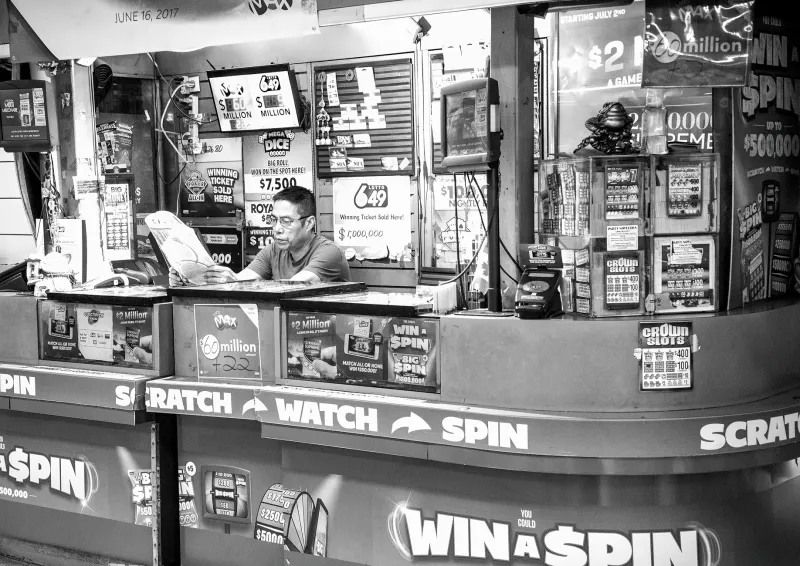
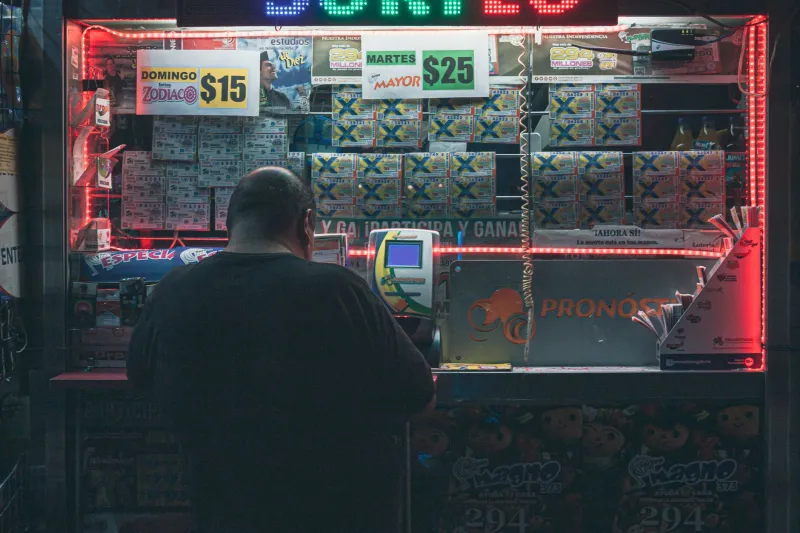
Walk into any gas station, convenience store, or lottery retailer in America and you'll notice something interesting about how scratch tickets are displayed. The $1 games sit in neat rows at one end, the $5, $10, and $20 premium options fan out at the other — and right in the middle, almost always at eye level, are the $2 and $3 tickets. That placement isn't random. Neither is the fact that players keep coming back to them.
Mid-range scratch games occupy a genuinely unique position in the instant-win world, and understanding why they work so well tells you a lot about the psychology of play, the math of prize structures, and what makes a scratch experience feel genuinely satisfying versus just... fine.
The Problem With the Dollar Game
Let's start at the low end. A $1 scratch ticket is, on the surface, the most accessible option on the rack. Low barrier to entry, zero commitment, easy impulse buy. And for a lot of players, that's exactly the appeal.
But here's the catch: dollar games are almost always built around compressed prize structures. With limited revenue per ticket, designers have less room to work with. That means fewer prize tiers, smaller top prizes, and — critically — shorter play experiences. You scratch three panels, find out you didn't match, and it's over in about fifteen seconds. There's not much of a journey there.
Research into what makes casual gaming satisfying consistently points to engagement duration as a key factor. The longer a player stays meaningfully involved in the mechanics of a game, the more rewarding the experience feels — win or lose. Dollar tickets, by design, can't offer much of that. They're a flash, not a flame.
Why Premium Tickets Miss the Mark for Most Players
On the other end of the spectrum, $5, $10, and $20 scratch games do solve the engagement problem. They tend to feature elaborate play areas, multiple game formats on a single ticket, more prize tiers, and genuinely life-changing jackpot potential. So why don't most players just default to those?
Two reasons: stakes anxiety and diminishing session value.
When a single ticket costs $10 or $20, the emotional weight of scratching it changes significantly. What starts as a fun, low-pressure pastime starts to feel more like a financial decision. Players become hyperaware of the cost, which creates a psychological tension that works against the relaxed, playful mindset that makes scratch games enjoyable in the first place. For players who engage with scratch games as a form of casual entertainment — a midday mental break, a small thrill to cap off a workday — that tension is counterproductive.
There's also a simple math problem with premium tickets from a session perspective. If your entertainment budget for scratch games is $10, a single $10 ticket gives you one experience. That same $10 buys you five $2 tickets — five separate moments of anticipation, revelation, and engagement. For players who value the process of playing as much as the outcome, the math clearly favors the mid-range.
What Game Designers Actually Know About the $2–$3 Tier
Game designers and lottery product teams aren't naive about any of this. The $2–$3 price point is deliberately engineered to hit a specific psychological target.
At this price tier, designers have enough revenue per ticket to build in more prize tiers, more play mechanics, and more moments of micro-excitement within a single ticket. A well-designed $2 scratch game might include a multiplier element, a bonus play section, and four or five distinct symbol-matching zones. Each of those elements adds a beat of anticipation — a small moment where the player is engaged and hoping.
Those beats matter. Behavioral researchers call them "near-outcome" moments, and they're deeply tied to the brain's reward circuitry. Every time you're about to reveal a symbol, your brain is briefly in a state of heightened attention. A game that creates more of those moments — without inflating the cost to anxiety-inducing levels — is a game that feels more fun, full stop.
The $2–$3 tier also tends to hit what pricing psychologists call the "fair value zone." Players intuitively feel like two or three dollars is a reasonable exchange for several minutes of entertainment and a legitimate shot at a meaningful prize. It clears the "that's too cheap to be worth anything" threshold of the $1 game while staying well below the "I'm not sure I should be spending this" ceiling of premium tickets.
Satisfaction Rates Tell the Story
Anecdotally — and increasingly supported by player feedback across gaming platforms — satisfaction rates among mid-range scratch players tend to outperform both ends of the pricing spectrum. Players who regularly buy $2 and $3 tickets report feeling like they got their money's worth more often, even when they don't win.
That's a meaningful distinction. In any form of entertainment spending, the perception of value doesn't always correlate with the outcome. A movie ticket doesn't become worthless if the film is mediocre — you still had the experience. Scratch games work the same way. The play itself is part of the value proposition, and the $2–$3 tier is simply better designed to deliver on that experience.
There's also a session longevity factor at play. Players who stick to mid-range tickets tend to play longer, spread their sessions out more naturally, and report fewer feelings of regret post-play. That's good for the player, and it's part of why wellness-conscious gaming communities increasingly point to this tier as the most balanced way to engage with scratch games.
Finding Your Own Sweet Spot
None of this means $1 tickets are worthless or that premium games don't have their place. For a true impulse buy — something to grab with your coffee change — a dollar ticket does exactly what it's supposed to do. And occasionally splurging on a $5 or $10 ticket for a special occasion? Totally reasonable.
But if you're someone who plays scratch games regularly and wants to get the most out of every session — more engagement, more moments of genuine excitement, and a better overall sense of value — the $2–$3 range is where the experience tends to peak.
It's not a coincidence that those tickets sit at eye level. It's not a coincidence that experienced players gravitate toward them. And it's definitely not a coincidence that game designers pour some of their best creative energy into that tier.
Two or three dollars. More game. Better experience. The math — and the fun — checks out.